Apply to an Academic Program Today!
About the School
Integrated Theological Study
The School of Theology at the University of St. Thomas is dedicated to instilling a deep understanding of Catholic doctrine and theology through investigation and research of Scripture. UST is the only school in the Cardinal Newman Guide that offers a Master’s in Historical Theology. An integral part of a liberal arts education, the study of theology helps the University community in its “constant effort to determine the relative place and meaning of each of the various disciplines within the context of the human person and the world that is enlightened by the Gospel,” and thus in preserving “the sense of the transcendence of the human person over the world and of God over the human person.” (John Paul II, Ex corde Ecclesiae, 16, 19).
Programs of study
Undergraduate Study
Theology plays an important role in advancing knowledge and dialogue between faith and reason. Thus, students are trained to read and use Scripture in accordance with theological methods, interpret documents in Church history, and assess, from within the ecclesial tradition, arguments in systematic and moral theology.
The Theology BA introduces students to the synthesis of knowledge central to the Catholic intellectual tradition, forming a strong foundation in theological inquiry and reflection.
Programs of study
Graduate and Advanced Programs
Graduate study expands this formation through specialized programs that integrate philosophical inquiry, evangelization, pastoral ministry, and cultural engagement, including:
- Master of Arts in Historical Theology
- Master of Arts in Philosophy and Theology (Center for Thomistic Studies)
- Master of Arts in Evangelization and Culture
- Master of Arts in Pastoral Theology (Spanish)
- Saint John Paul II Institute programs
For graduate students, the department offers an MA in Historical Theology, which focuses on Catholic dogmatic tradition and integrating Sacred Scripture. Students will be given a solid basis in Catholic theology informed by both Scripture and Tradition.
The school also offers a five-year BA/MA combined degree in Theology that enables undergraduate students to earn both the bachelor’s and master’s degrees in a streamlined program combining undergraduate and graduate studies.
In partnership with St. Mary’s Seminary, graduate programs at St. Mary’s also serve both lay students and seminarians. Professors often teach at both University of St. Thomas and St. Mary’s Seminary.
Experts in Scripture and Tradition
Theology Leadership
Dr. David P. Deavel
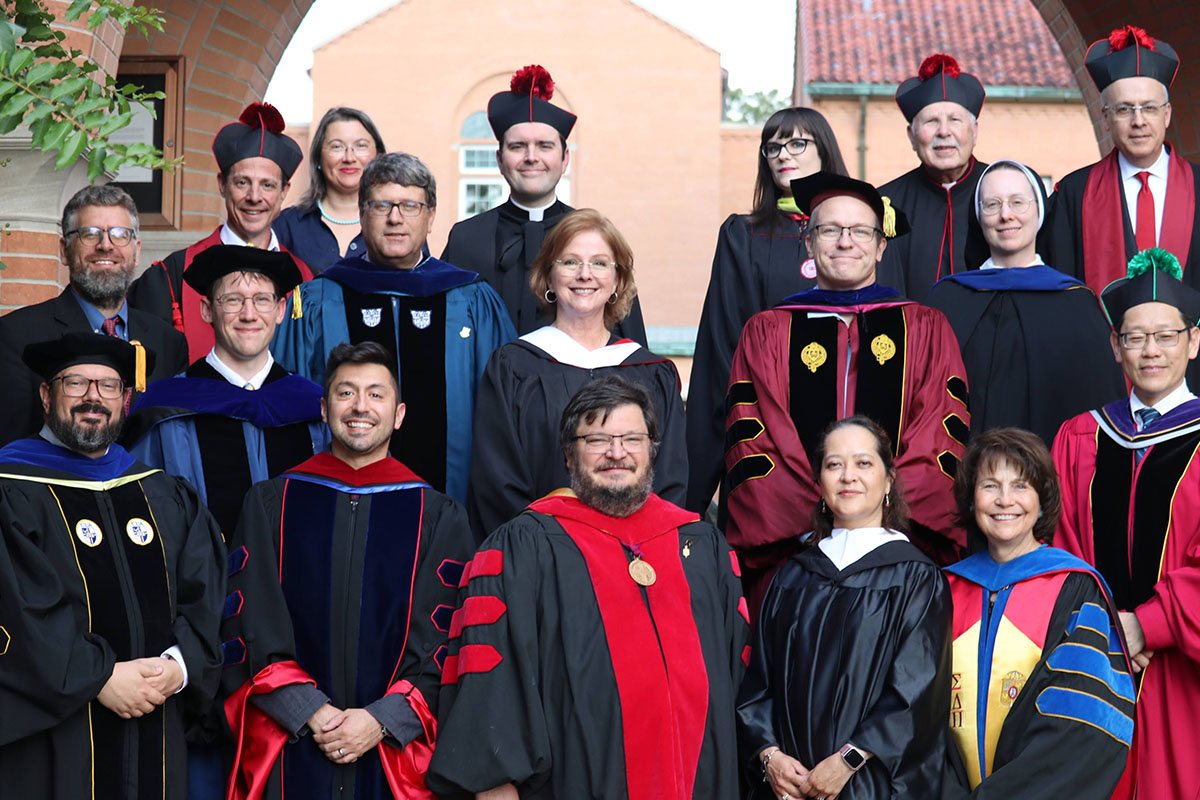
Under the leadership of Department Chair Dr. David P. Deavel and Graduate Program Director Dr. Andrew J. Hayes, the Theology Department approaches theological study as a deep reflection and inquiry in Scripture and Tradition. His work reflects that a solid grounding in historical theology keeps new theologians faithful to the Magisterium, steeped in Church Tradition amid exploration, and ordered to contemplation in all intellectual pursuits.
Student Experience
Learning Real Theology
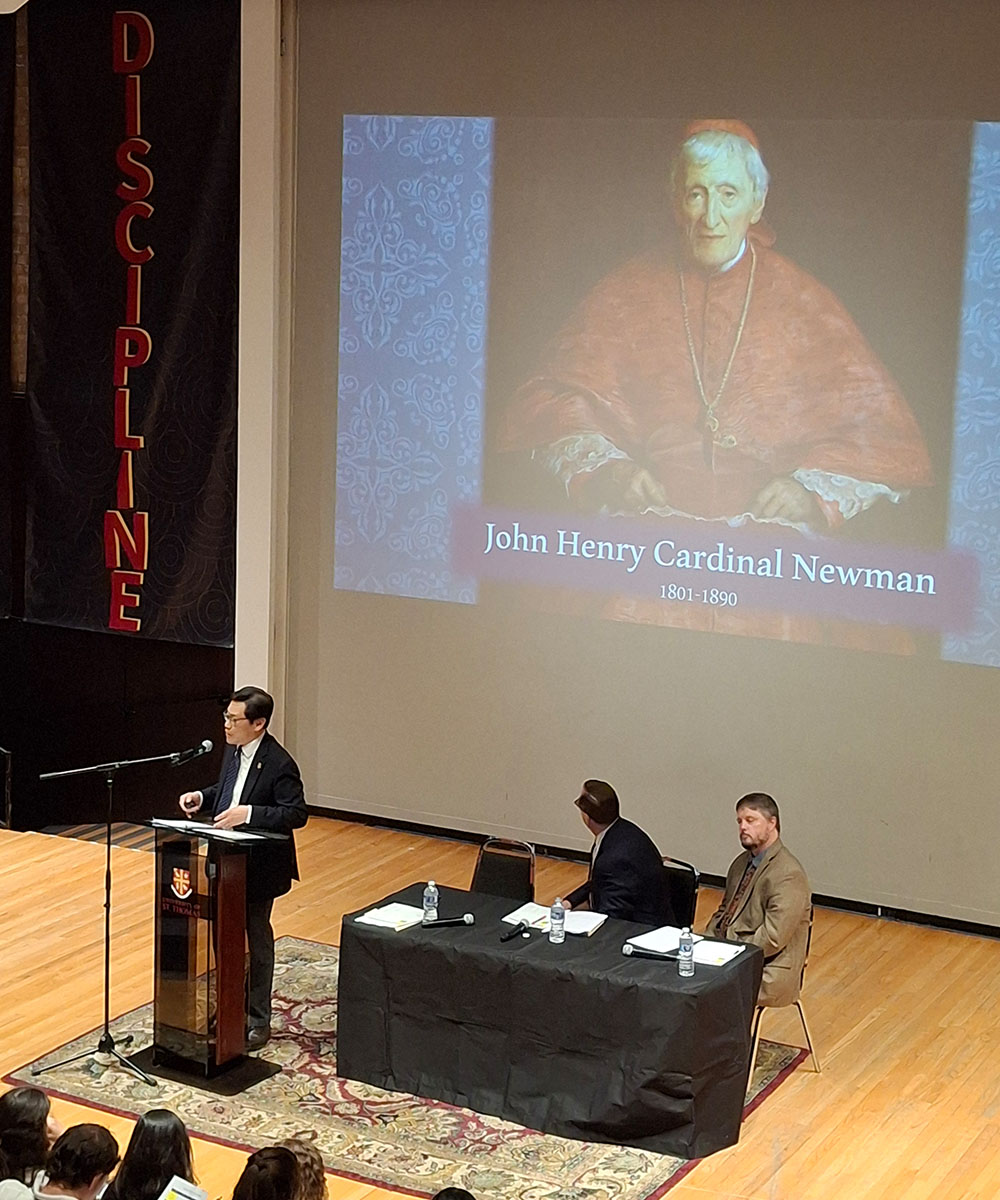
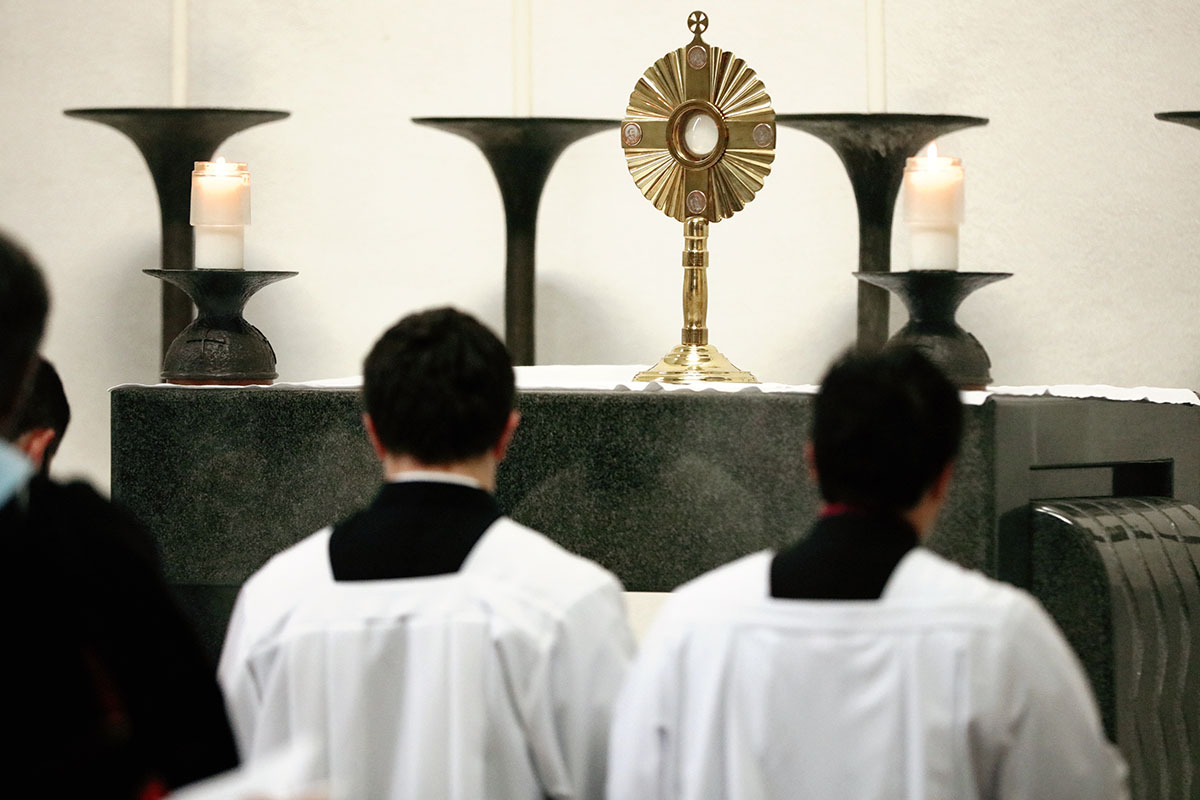
Divine Revelation, the intellectual pursuit of truth, prayer, and wisdom all converge in the science of theology. Students learn “real theology,” which means a deep immersion in the tradition—Patristic, medieval, and modern—that is both intellectually intense and always faithful to the magisterium. The Catholic educator is tasked with passing on the theological, spiritual, and doctrinal riches of the faith, which have been held and explored for two millennia. UST theologians take this task seriously and invite students to join them in this great tradition.
Crescamus in Christo
Considering Theology
at UST?
What types of things will I learn in theology?
Students learn theological skills such as biblical exegesis; engage with important figures from the Church Fathers to the medieval masters and the modern giants; and learn how to think about the Trinity, Christology, the Sacraments, moral theology, Catholic education, and more. The goal is a both a broad and deep understanding of historical theology.
What can you do with a theology degree?
A theology degree prepares graduates for a wide range of paths, including ministry, education, nonprofit leadership, graduate study, and professional fields that value ethical reasoning and critical thinking. Alumni of the School of Theology often share how employers are delighted that they know how to use their reason and problem solving in situations that do not have a clear path.
Is the Theology program rooted in the Catholic tradition?
Yes. The Theology program at the University of St. Thomas is grounded in the Catholic intellectual tradition while encouraging a historical knowledge of Scripture and Tradition. Students break open Scripture, Catholic doctrine, ethics, and history within a faithful and scholarly framework.
Do I need to be Catholic to study Theology at UST?
No. Students from a variety of faith backgrounds and academic interests are welcomed into the Theology program. The curriculum invites respectful dialogue and thoughtful study while remaining rooted in Catholic teaching.
What is the difference between studying Theology and Religious Studies?
More than just the study of religions, Theology approaches the study of faith from within a lived religious tradition, emphasizing belief, doctrine, and formation alongside academic scholarship. At UST, theological studies integrate the Catholic intellectual tradition with investigation and research.
Join Our Community
Go Deep into the Tradition
The School of Theology at University of St. Thomas offers a broad and deep foundation in historical theology within the Catholic Tradition, embracing both the continuity of the tradition and the philosophy of “genuinely metaphysical range” (Fides et Ratio 83) needed to understand it. Study with others seeking a deeper grasp of Catholic theology, guided by professors with expertise in all historical periods—ancient, medieval, and modern—equips a future theologian for being leaven for the Church and the world.