About the Programs
Educate the Next Generation
The Bachelor of Arts in Education programs are designed to develop classroom teachers who demonstrate the ability to be effective with today’s student population in a variety of field settings, both private and public. The University of St. Thomas trains educators to recognize that students in the classroom are thirsty for knowledge, dignity, responsibility and care. If you’d like to be a teacher who stretches students’ aptitude while growing in meaningful connections, this degree path is for you.
Areas of Study
Choose Your Educational Path
Undergraduate teacher preparation programs are available in a variety of certification levels of Early Childhood through grade 6 (with concentrations in Bilingual Generalist, Generalist, or English as a Second Language Generalist); grades 4 through 8 (with concentrations in English Language Arts & Reading, Mathematics, or Social Studies); grades 7 through 12 (in a variety of teaching fields), Early Childhood through grade 12 certification in Art, Music, and Theatre Arts.
Certification requirements vary for each level and field of concentration. Students should select courses for certification programs only after consultation with assigned advisors in the School of Education and Human Services. Students must file a degree plan in the School of Education and Human Services no later than the end of the sophomore year.
Chart Your Course
The University of St. Thomas offers several undergraduate degree options across several fields of study. Please take you time to review these options:
Grades 4-8
Degree Plan
Degree Plan
Degree Plan
Grades 7-12
Degree Plan
Degree Plan
Degree Plan
Early Childhood - 6th grade
Generalist & Bilingual Generalist Degree Plan
Degree Plan
With ESL Endorsement Degree Plan
Minor Plan
Early Childhood - 12th grade
Degree Plan
Degree Plan
Degree Plan
Degree Plan
Education at ust
Find the Program that Suits You
Service Learning
The University of St. Thomas Service-Learning Program trains students to serve others and offer resources to meet the needs of the Greater Houston community. Acting to fulfill the University’s vision of responding creatively to challenges posed by poverty, globalization, limited economic resources and changing demographics, as well as to the mission of Catholic universities in Ex Corde Ecclesia, students are able to connect classroom theory with practical experience in the community. To quote the Campus Compact, “Service-learning is meant to expand opportunities for public and community service in higher education, and to advocate the importance of civic responsibility in students’ learning.”
Programs and Projects
Service-Learning provides students with experiences they can apply in their theoretical and classroom learning to the real world of educational practice.
School of Education examples of service-learning projects include:
- Building gardens for local elementary schools and creating dynamic projects for local schools in literature, math, reading ,and science. Such programs include:
- Children’s Literature Night
- Super Science Saturday
- Lemonade Day
- A November Night with Numbers
Steps to Service-Learning Program Participation:
- See your academic advisor.
- Register for a class.
- When class meets, learn about options for service placement.
- Agree to criteria set by the professor (e.g., a reflective paper).
- Complete your contract to perform service hours in the community.
- Be supervised and evaluated by the nonprofit agency.
- Fulfill hours and other criteria to receive grade and course credit.
Dual Language Program
Training Teachers as Dual Language Educators
The University of St. Thomas Dual Language Program trains teachers to use their dual language skills in K-12 classrooms to teach linguistically diverse populations. This approach enables students to progress academically in English and another language and gain an appreciation of both cultures. Houston is a diverse city where Dual Language Program students have many opportunities after graduation. Many foreign dual language job opportunities are available for students who want to teach abroad after college.
The UST Dual Language Program integrates:
- Field experiences in Pre-K through 6th grade.
- Service-Learning.
Why Study Dual Language at UST?
- Small class sizes
- Prestigious high-need program
- Innovative dual language methodology
- Attractive campus
Field Experiences
Many excellent and diverse field experiences in both public and private settings are available to students majoring in Dual Language. Through various field placements, students experience dual language instruction in multiple language settings including Spanish-English, Chinese and Vietnamese dual immersion programs and traditional bilingual settings.
Pre-Service Technology Training
EDUC3313 – Digital Instructional Strategies is a new course offered in the School of Education and Human Services that will address technology integration in the classroom. This course will explore various technology tools (hardware, software, apps, and tools) that help facilitate teaching and learning. The course will not concentrate on specific platforms in order to broaden the ability of pre-service teachers to experiencing technology and exploring ways to use it with students. In addition to the exploration of technology tools, the course will use the state of Texas Technology Standards and the International Society for Technology in Education (ISTE) Standards for Educators as basic frameworks underlying the course.
Education Study Abroad
School of Education and Human Services students have the opportunity to explore international education practices first-hand by studying abroad.
Each year, UST spends more than 150 students to credited study abroad programs during the winter break and summer sessions. These international study opportunities provide knowledge of diverse cultures and a broad global perspective. School of Education and Human Services study abroad opportunities provided in recent years include travel to Italy, France, England, Jamaica, Greece, Germany and Switzerland.
Looking Ahead
Clinical-Teaching Admissions Requirements
After full admission to Teacher Education and successful completion of certain required courses in the professional development sequence, candidates for certification must apply for admission to clinical teaching. Our partners at Region 4 ESC assist in the application, placement, supervision, and initial certification processes.
Students will be informed of processes, timelines, and requirements during the EDUC 3102 seminar course. Professional education coursework must have been completed within the past ten years.
Criteria
The University of St. Thomas Service-Learning Program trains students to serve others and offer resources to meet the needs of the Greater Houston community. Acting to fulfill the University’s vision of responding creatively to challenges posed by poverty, globalization, limited economic resources and changing demographics, as well as to the mission of Catholic universities in Ex Corde Ecclesia, students are able to connect classroom theory with practical experience in the community. To quote the Campus Compact, “Service-learning is meant to expand opportunities for public and community service in higher education, and to advocate the importance of civic responsibility in students’ learning.”
Programs and Projects
Service-Learning provides students with experiences they can apply in their theoretical and classroom learning to the real world of educational practice.
School of Education examples of service-learning projects include:
- Building gardens for local elementary schools and creating dynamic projects for local schools in literature, math, reading ,and science. Such programs include:
- Children’s Literature Night
- Super Science Saturday
- Lemonade Day
- A November Night with Numbers
Steps to Service-Learning Program Participation:
- See your academic advisor.
- Register for a class.
- When class meets, learn about options for service placement.
- Agree to criteria set by the professor (e.g., a reflective paper).
- Complete your contract to perform service hours in the community.
- Be supervised and evaluated by the nonprofit agency.
- Fulfill hours and other criteria to receive grade and course credit.
Clinical-Teaching Field Experience
Training Teachers as Dual Language Educators
The University of St. Thomas Dual Language Program trains teachers to use their dual language skills in K-12 classrooms to teach linguistically diverse populations. This approach enables students to progress academically in English and another language and gain an appreciation of both cultures. Houston is a diverse city where Dual Language Program students have many opportunities after graduation. Many foreign dual language job opportunities are available for students who want to teach abroad after college.
The UST Dual Language Program integrates:
- Field experiences in Pre-K through 6th grade.
- Service-Learning.
Why Study Dual Language at UST?
- Small class sizes
- Prestigious high-need program
- Innovative dual language methodology
- Attractive campus
Field Experiences
Many excellent and diverse field experiences in both public and private settings are available to students majoring in Dual Language. Through various field placements, students experience dual language instruction in multiple language settings including Spanish-English, Chinese and Vietnamese dual immersion programs and traditional bilingual settings.
Certification
State Board of Educator Certification (SEBC)
To enter the teaching profession, students must take the related Texas Examinations for Educator Standards (TExES) required by the State Board for Educator Certification (SBEC). Multiple examinations may be required depending upon the area of certification being sought. In partnership with Region IV ESC, students may become certified in the state of Texas after all requirements have been successfully fulfilled.
Recommendation for Certification
In partnership with Region IV ESC, students can be recommended for certification only after a student has met all certification requirements, including a) completion of a bachelor’s degree; b) completion of Early Childhood through grade 6 (EC–grade 6), Grades 4 through 8, Grades 7 through 12, Early childhood through grade 12 programs; c) passing scores on all required TExES examinations; d) state fingerprinting and background check; and e) applying for certification through the TEA website.
In accordance with Article 6252–12c, Texas Civil Statutes, the Commissioner of Education may refuse to issue a teaching certificate for persons convicted of a felony or misdemeanor crimes that directly relate to the duties and responsibilities of the teaching profession. Applicants for Texas Certificates will be screened for a record of felony or misdemeanor convictions through the Texas Department of Public Safety. Potential applicants may wish to contact the Certification Officer regarding concerns about this Texas requirement.
REad about UST Alumni
Success Stories
Read stories about UST alumni thriving in their vocations and careers.

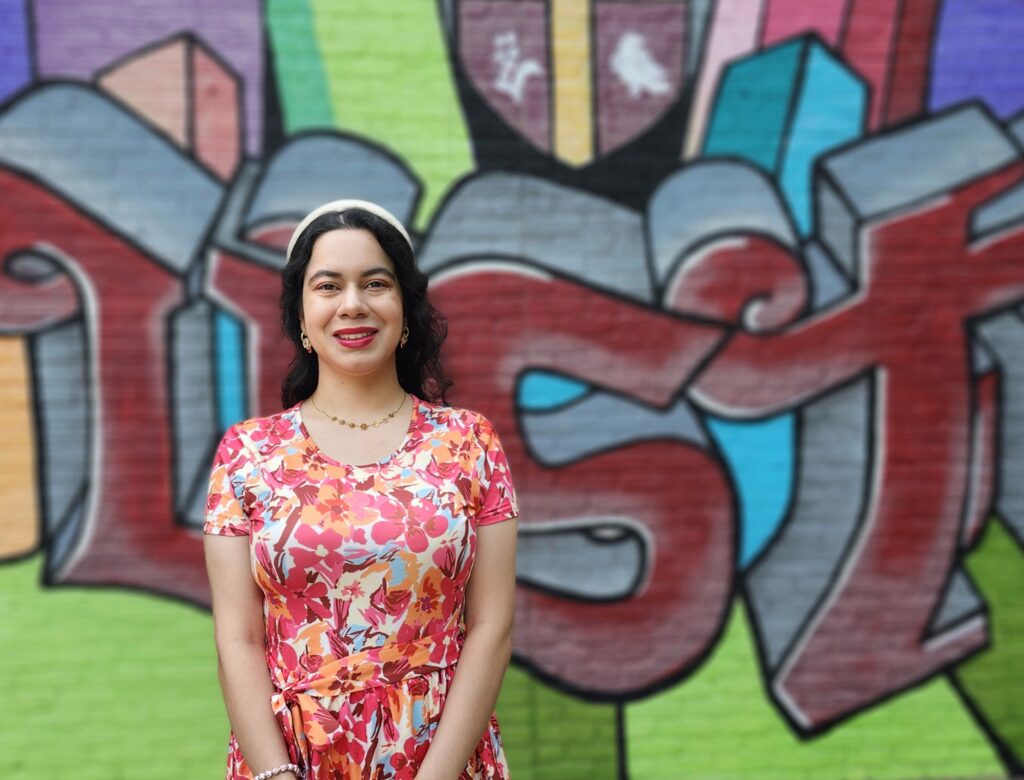
Baseball Grads Reflect on Brotherhood, Fellowship

Alumnus receives award with Houston Methodist