
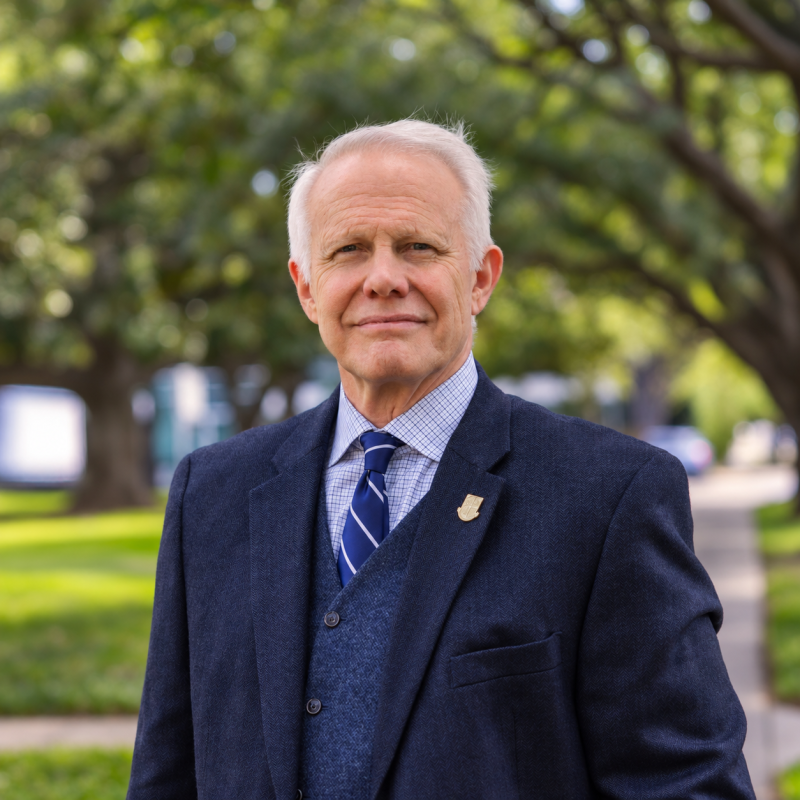
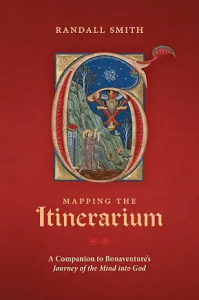
Dr. Randall Smith, full professor and J. Michael Miller Endowed Professor of Theology at the University of St. Thomas, has published his seventh book. His latest book, released by Emmaus Press, is titled “Mapping the Itinerarium: A Companion to Bonaventure's Journey of the Mind into God.”
Dr. Smith shared about his new book in a Q&A with UST Senior Director of Communications Bridget Richardson.
---
Bridget Richardson: What is the focus of your new book?
Dr. Randall Smith: As the title indicates, the book deals with St. Bonaventure's work "The Journey of the Mind into God" (in Latin, the Itinerarium mentis in deum). For centuries, this has been Bonaventure's most popular work, and it is considered one of the gems of medieval mystical theology. This is the only continuous book-length commentary on Bonaventure's text other than my previous, more "academic" book on this topic published by Cambridge University Press. This book is a revised version of that longer, Cambridge University Press volume, meant for a more popular audience. I am grateful to the Cambridge Press editors for their permission to do this and to the editors at Emmaus Academic for agreeing to publish this volume.
BRR: Who is the audience and how do you think it will be enriching for them?
RS: My purpose in writing the book was to give readers of Bonaventure's text a guide to help them understand and appreciate it. I say in the Introduction to the volume that I hope readers of my book will have Bonaventure's text open beside them as they read so that they can keep referring back to Bonaventure's text as they read mine.
BRR: What were some of the key points of the book that you’d like to point out?
RS: One important thesis of this book and the book I published with Cambridge University is that the key to understanding Bonaventure's text is to recognize how he has taken the style of preaching that was common during the thirteenth century --- the so-called "modern sermon" (sermo modernus) style --- and adapted it for use in the Itinerarium. This style was very creative and allowed Bonaventure to make use of an abundance of visual imagery. The entire work, in fact, is structured around the image of the six-winged Seraph angel that St. Francis saw in a vision on Mt. Alverna and from which he received the stigmata. But there are many others.
BRR: How do you think this book enhances a UST student or faculty experience?
RS: Many readers report that they love Bonaventure's Itinerarium, but they find that it "goes over their heads." If anyone is reading Bonaventure's text, this book should help. That was the goal of my writing it.
BRR: What was the process of writing this book like for you?
RS: It was a delight. Bonaventure is both brilliant and eloquent. Teasing apart his rhetorical puzzles and deciphering his fascinating imagery was a constant challenge.
BRR: You mentioned this is your seventh book. Are there two or three others you’d like to recommend?
RS: The shorter, more accessible books are:
Reading the Sermons of Thomas Aquinas: A Beginner's Guide (Emmaus Press, 2016),
From Here to Eternity: Reflections on Death, Immortality, and the Resurrection of the Body (Emmaus Press, 2022).
And the current one: Mapping the Itinerarium on Bonaventure's Journey of the Mind into God.
BRR: Is there anything else you’d like to add about the book or UST?
RS: This is a university devoted (rightly to my mind) to the thought of Thomas Aquinas. There is no one better. But we should also pay attention to Bonaventure. Thomas and Bonaventure were the two great lights of the thirteenth century.