
At the Nesti Center for Faith & Culture at University of St. Thomas, students are provided education and formation to help them examine, discern and live out the relationship between the Gospel’s universal call to love and the worldview and values of the dominant American culture. The hallmark master’s program that facilitates bringing a Catholic voice to this dialogue between faith and culture is the Master of Arts in Faith and Culture (MAFC).
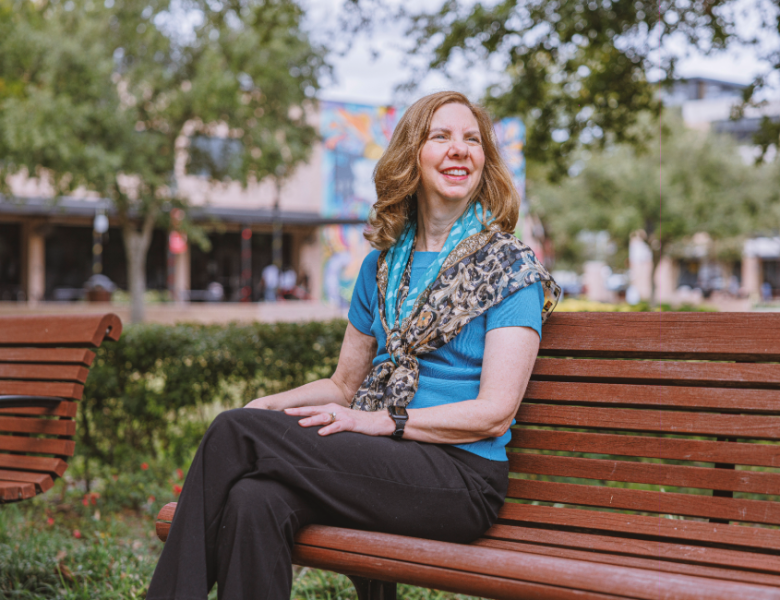
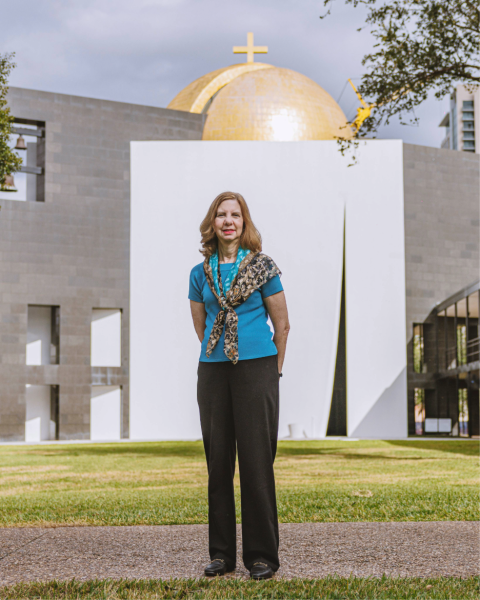
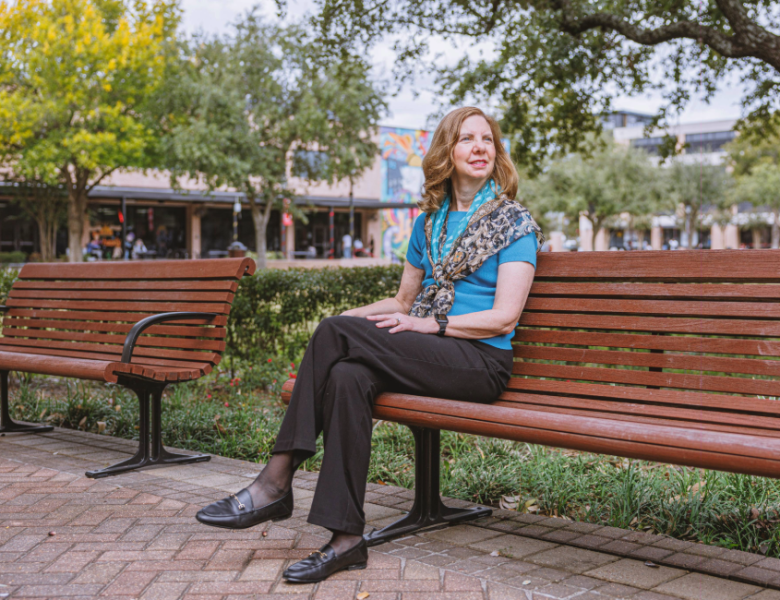
Pam Thome, with an undergraduate degree in Electrical Engineering from the University of Texas at Austin, and a storied career of designing video equipment for the Space Shuttle program, decided to return for her graduate studies.
In a Q&A with Senior Director of Communications Bridget Richardson, MAFC ‘17, Thome describes her experience in the MAFC program, how it has changed her worldview and why this program is one that anyone seeking understanding should engage.
Bridget Richardson: Tell me a bit about yourself - where you grew up, family, job, recently married son!
Pam Thome: I grew up in East Texas in a small town called Henderson. I went to the University of Texas at Austin and majored in Electrical Engineering. I met my husband, Gary, there and got to know him when we had four classes together in one semester. We like to joke that we were set up by a computer - the UT scheduling computer.
After graduation, I went to work for Lockheed Martin as a contractor for NASA, designing video equipment for the Space Shuttle program. I returned to graduate school in Manufacturing Engineering and worked at Compaq Computers for 10 years, mostly supporting the circuit board factories.
Gary and I have been married for 32 years and have five amazing children, all in their 20s. I was fortunate to be a full-time mom for most of their childhood. We just celebrated the marriage of our middle son. He and his wife are Aggies, but we love them anyway!
 BR: Wow, that’s quite a career. How would you describe your faith life - perhaps referencing before and after your experience in the MAFC program?
PT: I was raised Protestant, but fell away from faith in my teens and 20s. I married a faithful Catholic man from a beautiful Catholic family, and that started my journey into the Church. Wandering around the internet, I found the writings of St. Teresa of Avila and St. Thomas Aquinas and was struck by both the depth of their spirituality and their intellectual rigor. Like so many of my classmates and professors in the MAFC, I was attracted to the beauty of the truths of the Catholic faith. I came into the Church in 1997 at Prince of Peace Catholic Church in northwest Houston, and have been a member of the parish ever since.
I tell people that when I started the MAFC program, I was expecting to be intellectually challenged. It has definitely been that, but it has also been a very deep and profound spiritual journey. I feel like I have been on a retreat for the last two and a half years! [The Rev. Donald] Nesti, founder of the Nesti CFC, in particular, has a way of grounding everything he teaches in the merciful love of God. He is a constant inspiration, as are all my professors and fellow students. It’s one thing to learn about the faith; it is another to see it lived out in so many different, fruitful vocations.
BR: As a graduate of the MAFC program, I agree wholeheartedly. What a beautiful story. How did you discover the program and the Nesti Center for Faith and Culture?
PT: My youngest child graduated from high school in 2023. Empty nesting meant I had some free time that I could devote to my own formation. I saw an ad in the Texas Catholic Herald for the University of St. Thomas. I followed the links on the website to the MAFC program and as soon as I saw the curriculum I knew this was exactly what I wanted to do. I could feel the Holy Spirit going “This one! This one!”
BR: I love that! And selfishly I love that the marketing and communications efforts UST and the Nesti team put in are working! I learned that you entered the program through the scholarship initiative aimed at ministers that the Nesti CFC does. What was that process like?
PT: I was worried initially about the time frame for application because I discovered the program only a few weeks before the deadline. However, the application process was straightforward. The application process requires an essay and interview with MAFC program director Marion Fernandez-Cueto, but she made it both painless and welcoming.
BR: Oh good. The MAFC is a unique degree, right? What about the MAFC interested you?
PT: I have a deep interest in why systems work the way they do, or why they don’t work the way they should. This includes not just physical systems, but things like government and culture. I wanted a place where I could explore important topics with intellectual rigor and in a way that honored our Catholic faith. The MAFC program felt like exactly that kind of environment.
I liked the way the program looks at different aspects of modern American culture in light of the teachings of the Church. How does our Catholic faith inform how we approach economics, science, politics and gender - all the current hot-button subjects in the media and online? How do theology, philosophy, Scripture and Tradition help me have not just an opinion, but a well-reasoned argument for how things should be? How can I have a real dialogue with people? These are questions that I had that the program answers.
BR: That’s really powerful and timely. Tell me more about your experience in the program.
PT: The program was both intellectually challenging and spiritually expansive. For instance, Fr. Nesti taught a class on the Spiritual Journey in the American Context. We looked at models of spiritual growth and development. He challenged us to think deeply about our own spirituality and how it is both different from and similar to other people’s spirituality.
One of the core classes in the MAFC is a class in the Art and Asceticism of Dialogue. For our final project, we were challenged to have a difficult dialogue with someone we know, using the skills we had developed in class. Talk about practical application! I use those dialogue tools all the time now.
Another class in the Mission of the Church equipped us to think through how we would evangelize different people in different contexts.
BR: Those were some of my favorite classes too! In those courses, you really have to hold a mirror in front of yourself and see your own understanding of those things too, which is very challenging, but incredibly valuable for your entire life. How have you integrated what you’ve learned in the program in your personal and professional life?
PT: Before I started in the program, I had the beginnings of a framework for evangelization. I was inspired to formulate the kerygma - the basic story of salvation - as three foundational questions: Who am I? What am I supposed to be doing? Where do I belong? With three foundational answers - What I call Identity, Purpose and Community, or IPC. As I went through the program, I found so many elements that filled out my outline. If you look at my notes, you’ll see “Identity” or “Purpose” tags all over the margins. As we discussed ideas in class, I’d find myself thinking: “That’s talking about community!”
I am part of the apostolate Loving Stones of Christ, which my husband and some friends founded a few years ago. Loving Stones produces materials that aid in growing disciples and apostles at the parish level. I am happy to say that I have been able to transfer many of the things I learned in the program directly into our materials.
 BR: That’s outstanding. Tell me more about how has it affected the ministry work you do with the Archdiocese?
PT: In addition, through the program, I have met so many wonderful people in our Archdiocese and across the country that I now have a wonderful network of expertise to draw on. For example, I also work in marriage prep and marriage enrichment at our parish. I am taking a class this semester in the Marriage Catechumenate and my professor was a speaker at a marriage summit I attended with our marriage enrichment team. It seems like I am always running into people I know from the program at conferences and events around the Archdiocese and beyond.
BR: It is a small Catholic world once you begin to operate in educational spaces! Professor Fernandez-Cueto mentioned that you have an interesting practicum this semester too. Tell us a bit about it.
PT: Coming into the program, I had an outline for an evangelization model I call IPC, as I mentioned earlier. As I was going through the program, the material and discussion from my classes was helping me fill out my IPC evangelization model. This past September, I had a chance to present the full model in a talk for our parish women’s conference titled “Identity, Purpose, and Community: Navigating Life’s Big Questions.” The talk sparked some lively conversation amongst the women attending the conference and was well-received according to the survey data I collected. It was a joy to write the talk as it pulled together many concepts that I had encountered in my courses. I could not have put this particular talk together without the program.
In addition to the conference talk, I will be writing out the material from the presentation as a series of articles for our apostolate’s newsletter, and the section on “Identity” is the source material for a chapter in the new book our apostolate is producing on evangelization.
BR: Congratulations on the upcoming book! And congratulations on your upcoming graduation in December! How do you hope to continue the work of the Nesti CFC and your MAFC after graduation?
PT: Our apostolate has a mission to equip disciples and apostles by producing materials and equipping parish small group communities. The concepts I have explored in the MAFC program inform me daily in the work we do.
BR: Awesome. Why do you think it’s special for a program like this to connect with parishes and parish ministers?
PT: Knowledge is great on an individual level. We are called to worship God with our minds, but I believe God is calling a new generation of apostles to take knowledge out into communities and use it to build up the church. The knowledge I gained and the growth I experienced in the program directly influence my ministry as I’m sure it does for many of my classmates. This is how we build up the Body of Christ.
BR: How has your connection with your classmates enhanced your experience?
PT: My cohort comes from all over the country, and even out of the country. We have diverse backgrounds and unique callings. Every class has had a rich layer of discussion added to the already enriching materials and lectures. Of course, not only have my classmates added to my academic experience, but through our shared discussions they have also become my friends and co-workers in the vineyard.
BR: If you could help someone understand one thing about the MAFC, what would it be?
PT: There are many different ideologies shouting to be heard in America today. This program is a perfect way to do a deep dive beneath the clutter and noise and find the eternal truths of the Church and how they apply today.
BR: Is there anything else you’d like to add about the mission of the Nesti CFC, your experience in the MAFC or how UST molds leaders of faith and character?
PT: Our country and world need strong Catholic leaders who can speak truth in this moment of confusion and anger. The Nesti CFC, MAFC program and UST help form leaders who are hard at work in parishes and dioceses making a difference. I am so glad I found this program. I could not do the ministry I do today without the skills I have learned and the people I have met.