

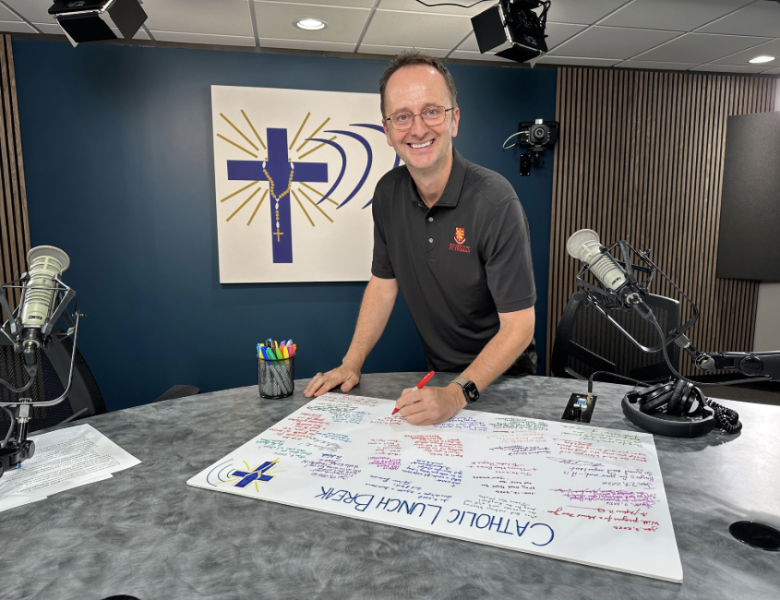
“When I got the email, I was like, ‘What?!’”
That was the reaction of Dr. Steve Provence, a new faculty member at the University of St. Thomas in the Department of Physics and Engineering, upon learning that he had played a role in one of the most ambitious space efforts of a generation: NASA’s Artemis II mission.
Dr. Provence, associate professor of electrical engineering who joined UST in January 2026, is still settling into campus life — and still processing the magnitude of the work he left behind, nearly a decade ago.
At NASA’s Johnson Space Center, Dr. Provence contributed to Artemis II — work that, in many cases, concluded years before the rocket ever reached the launch pad.
“With Artemis II, I had two projects that I worked on,” he said.
One of the most critical was the launch abort vehicle, a system designed to protect astronauts in the event of catastrophe, keeping them safe from certain death if anything on the spacecraft went wrong. Dr. Provence spent roughly 4,000 hours working on this project alone.
“That safety system, perched at the very top of the rocket, is built for worst-case scenarios,” he said. “That entire rocket is about 95 percent explosive fuel,” he said. “If things go catastrophically wrong, it is designed to yank them away as fast as humanly possible.”
The work required relentless testing and simulation. This video shows a test for the Orion capsules designed to carry astronauts to the moon. The launch abort vehicle activates about 48 seconds into video.
“We would run 300,000 simulations, and you would see how many of those simulations you had killed the astronauts in,” Dr. Provence said. “You ran that over and over and over till we finally perfected the vehicle.”
The project’s scale and the importance of this integral safety measure is undeniable and, thankfully, did not need to be deployed during the launch of Artemis II.
 Dr. Provence also contributed to a second major effort: an optical communication system known internally as “O2O.”
“O2O is laser communication,” he said. “The system converts video into data and transmits it via laser from space back to Earth. All the video you saw, when they were close to the moon, they were using O2O for that. It had to hit a little optical device here on the Earth about the size of a copper penny.”
Working alongside the Massachusetts Institute of Technology (MIT), Dr. Provence helped develop the control systems that allowed the laser to precisely target its destination.
“I did a lot of the work on how the device and honed in on its location,” he said.
Dr. Provence played a pivotal role in major parts of the spacecraft and communication needs of the astronauts. Even as he reflects on billion-dollar programs and thousands of collaborators, Dr. Provence is humble in his mindset.
“I was just one of the team members,” he said. “The success really lies at the feet of all of those thousands of individuals that spent decades working on these projects.”
Watching the launch from outside NASA offered a new perspective for him.
“It was very strange that I don’t have that vision of being behind the curtain anymore,” Dr. Provence said. “What you guys see is what I was seeing.”
The shift, he said, made the moment more powerful.
“It’s actually really inspiring and exciting to see it from this perspective,” he said.
 Teaching at the University of St. Thomas
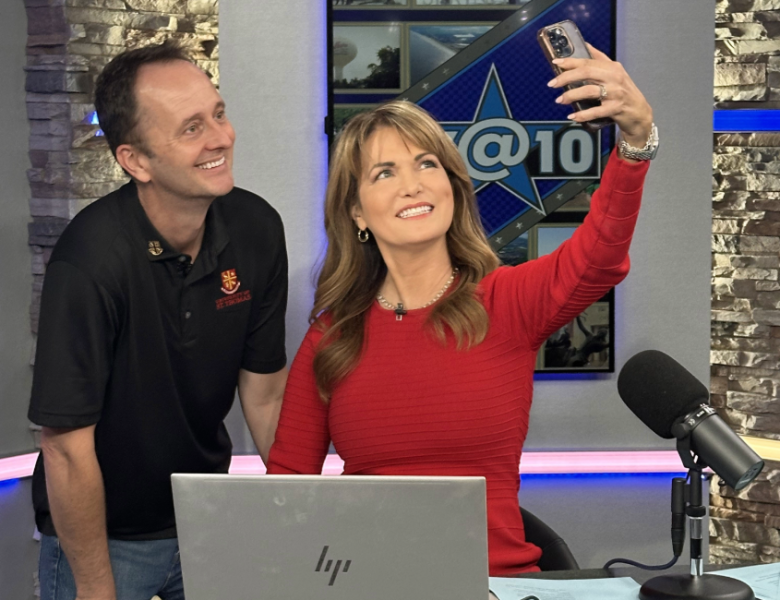
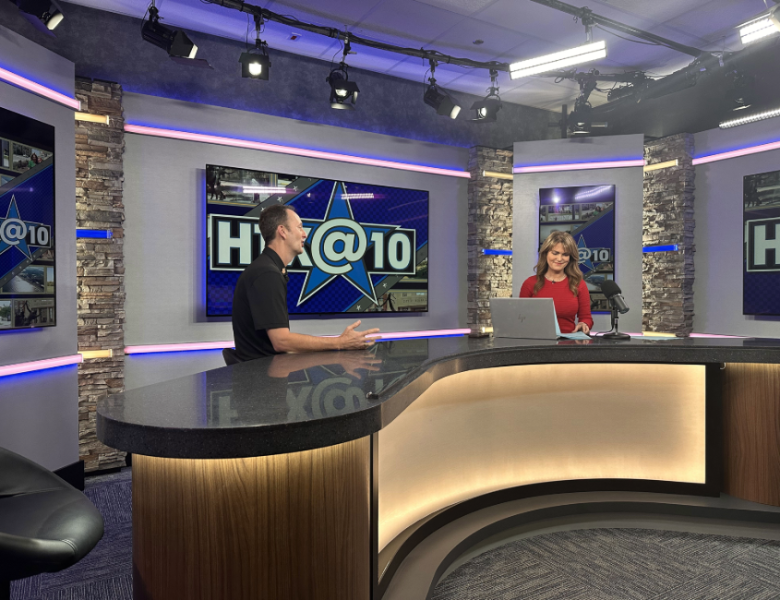
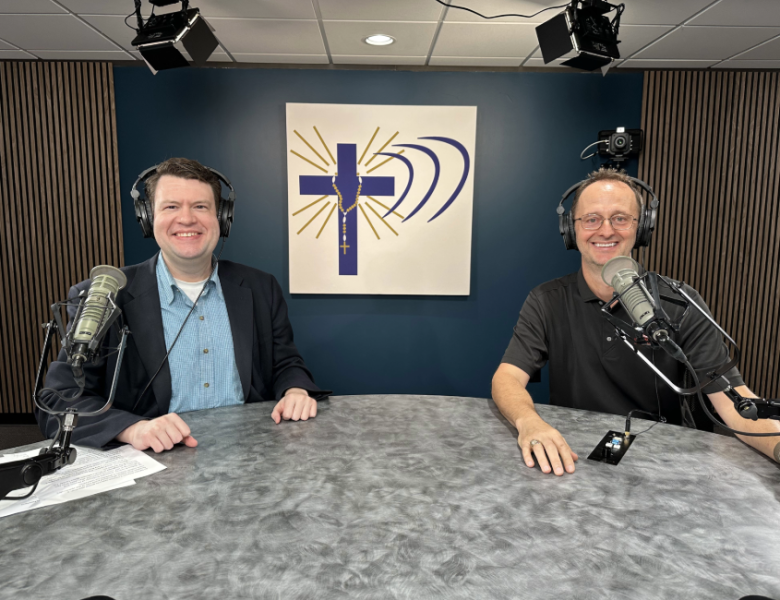
Since coming to UST, Dr. Provence has been featured on local news media for his contributions to Artemis II, including FOX 26's "HTX @ 10" and Guadalupe Radio Network KSHJ AM 1430's Morning Catholic Drive Time show.
Now in the classroom, Dr. Provence is translating decades of experience into lessons for students.
“I literally left NASA on Jan. 2nd and I started here at UST on the 5th,” he said. “I’m teaching digital signal processing, so they have definitely gotten some examples about the O2O project. I want to make sure that they don’t make their worth part of the success and the failure of the projects. Just be happy with the opportunities.”
Back on campus, Dr. Provence is still unpacking — both literally and figuratively.
 “I’m still not quite moved in,” he said. “It still looks a little bit like a warehouse in my office, but I’m getting there.”
But his ambitions are already taking shape.
“I’ve been dreaming about this job for a long time,” Dr. Provence said. “I have visions here of developing a center for space research. It is time for me to give back to the generation to come so they can make an impact on the world and even among the stars.
After more than 35 years in Houston, the transition to UST felt natural and at a good time.
“I love Houston and this is my favorite part of the city,” he said. ”I applied for this job and everything fell into place wonderfully. It was a no-brainer and I’m loving it at UST. I’m having more fun than I expected, and I had high expectations. I wake up every morning just happy to come to work.”