The Bachelor of Science in Mechanical Engineering prepares students for a career in industry and encompasses a rigorous course of study with a strong foundation in general engineering and other STEM subjects as well as specialized upper division classes in Mechanical Engineering.
Early courses focus on the fundamentals of being a successful engineer such as complex problem solving, critical thinking, and self-driven learning. Upper division courses further the students’ knowledge with in-depth courses covering specialized topics in Mechanical Engineering, and unique electives allow the students to tailor the curriculum to their desired career goals. Due to the versatile nature of studies encompassing areas in fluid mechanics, control systems, and heat transfer, Mechanical Engineers are in high demand in industry, and employment opportunities range from the petrochemical and chemical industry to Aerospace.
This program’s curriculum is aligned to ABET (Engineering Accreditation Commission) quality standards.
Program Educational Objective of B.S. in Mechanical Engineering
Within three to five years following graduation, graduates with a Bachelor of Science in Mechanical Engineering from the University of St. Thomas are expected to:
Attain professional competence, sustain the intellectual curiosity of lifelong learners, and continuously contribute to the global body of knowledge in the field through scholarly work, inventions, and other forms of innovation.
Acquire leadership competence by applying scholarly knowledge and effectively communicating ideas and solutions through written, oral, and visual means.
Demonstrate social responsibility, professional commitment, and ethics through community engagement and active participation in professional organizations, reflecting the core values of the University of St. Thomas.
The Student Outcomes of the Mechanical Engineering Program
An ability to identify, formulate, and solve complex engineering problems by applying principles of engineering, science, and mathematics.
An ability to apply engineering design to produce solutions that meet specified needs with consideration of public health, safety, and welfare, as well as global, cultural, social, environmental, and economic factors.
An ability to communicate effectively with a range of audiences.
An ability to recognize ethical and professional responsibilities in engineering situations and make informed judgments, which must consider the impact of engineering solutions in global, economic, environmental, and societal contexts.
An ability to function effectively on a team whose members together provide leadership, create a collaborative environment, establish goals, plan tasks, and meet objectives.
An ability to develop and conduct appropriate experimentation, analyze and interpret data, and use engineering judgment to draw conclusions.
An ability to acquire and apply new knowledge as needed, using appropriate learning strategies.
Performing Study
Engineering Leadership
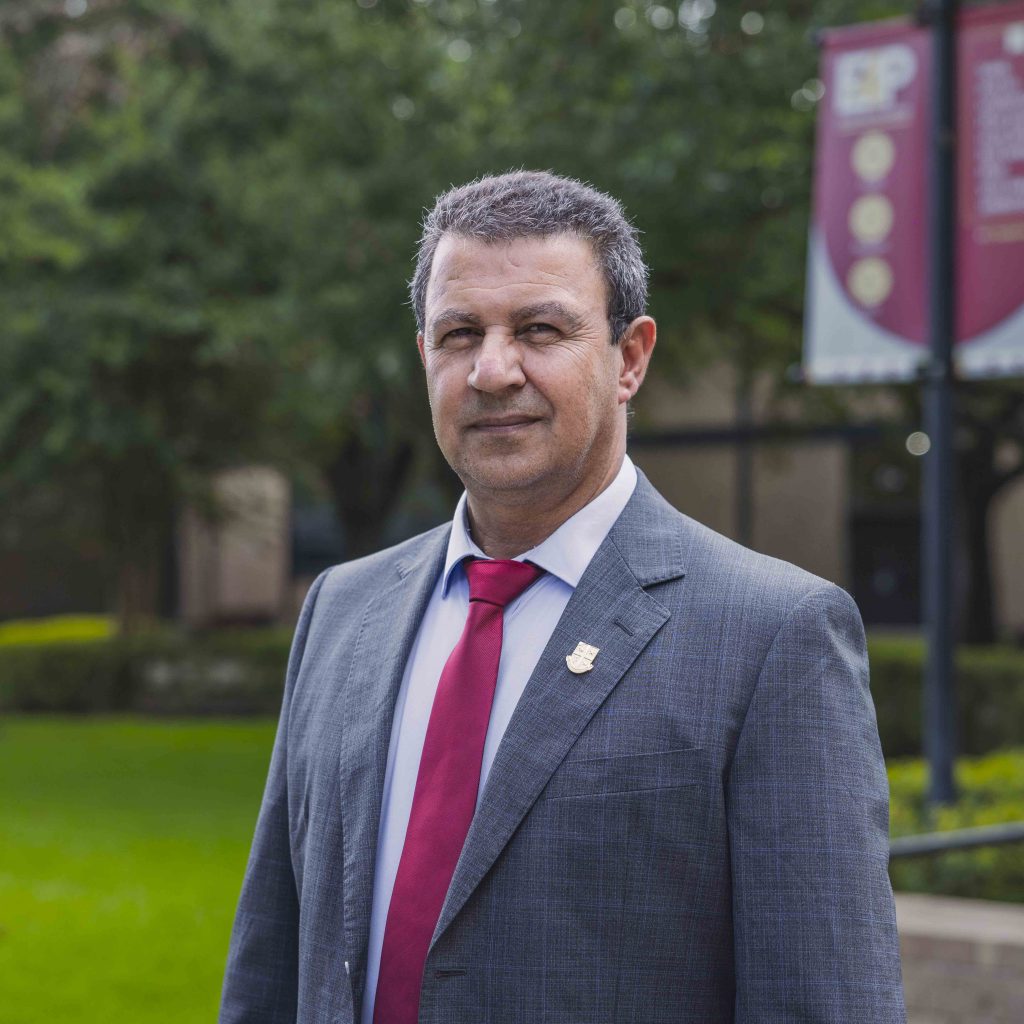
Vahid Taghikhani, Ph.D.
The UST Physics and Engineering departments operate under the leadership of Vahid Taghikhani. His leadership reflects a commitment to interdisciplinary learning, academic excellence, and the development of students as thoughtful, ethical, and engaged individuals.