
Catholic writers can teach us a lot about suffering, suicide and hope. So that begs the question, can Catholic fiction literature potentially save lives? Dr. Martin Lockerd thinks it can.
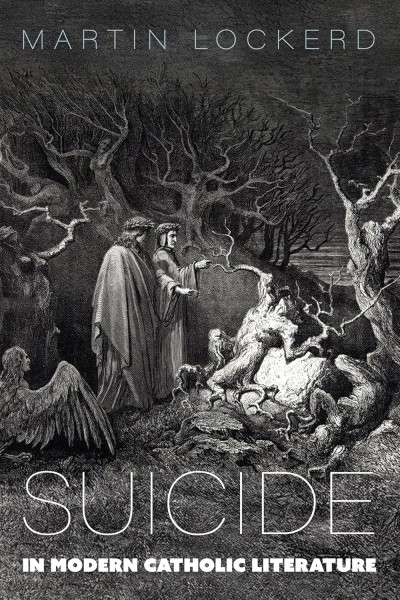
Dr. Lockerd, associate professor and division dean of Core and Centers for Excellence at University of St. Thomas-Houston, as well as assistant director of the UST William J. Flynn Center for Irish Studies, recently published a book titled, “Suicide in Modern Catholic Literature.” This book tackles the problem of suicide in modern culture through the art of literary giants such as J.R.R. Tolkien and Walker Percy, Robert Hugh Benson and Muriel Spark, J.K. Huysmans and Graham Greene.
MAX Studios Bridget Richardson posed questions to Dr. Lockerd about why he decided to cover such a heavy topic in his second book and how he thinks people will respond.
Bridget Richardson: Suicide is such an intense and triggering topic. Why did you decide on this topic for the book?
Dr. Martin Lockerd: Suicide rates have been on the rise for some time, and the situation worsened substantially during COVID. Legalized euthanasia, a form of state-sanctioned suicide, is also on the rise in countries such as Canada and the UK. So, it seemed to me that the time had come to seek for some solutions to this epidemic. As a student of literature, my mind went naturally to the many great Catholic writers who have wrestled with the problem of suicide over the last century. I thought they might have some wisdom to share with our increasingly secularized culture.
BR: Very interesting. What was the journey of writing this book like for you? Does the topic have significance to you?
ML: I began working on this project about four years ago when it became impossible to ignore the spiking suicide statistics in the United States. Given the topic, I’ve needed to take occasional breaks for my own wellbeing, but I’m very happy that I stuck with it.
BR: How do you see the rise in suicide connected with modern society? For instance, do you think people are wrestling with more complex problems or are they just hoping for an end of various kinds of suffering?
ML: In brief, the rise in suicide rates seems inextricably linked to modernity, which is itself defined in part by many nihilistic philosophies that, over the course of the last century, have trickled down from the elites to the common person. Today, many people walk around with half-formed versions of the philosophies of people like Nietzsche, Freud, and Sartre living in their heads even if they haven’t read these thinkers. All three were fascinating thinkers, but all were, in the final assessment, philosophers of despair. Some of the literature I explore directly helps to highlight the ways in which their intellectual contagion contributes to our culture of despair.
People suffering from suicidal ideation are truly suffering, and we’ve pretty well proven that greater material affluence and a purely medicalized approach to such suffering can’t solve the problem. Most people in the developed world are incredibly affluent. Kings of the past lacked some of the comforts most of take for granted, and governmental social safety nets make things like famine unimaginable. We’re also the most psychologized and medicated people in history, but far too many of us are desperately depressed, lonely, purposeless, and hopeless. There’s clearly a spiritual sickness at work here, and we need great art to help diagnose and perhaps even help treat that sickness.
BR: In your view, how is wrestling with this topic healthy for healing and/or recognizing this problem in our society?
ML: At University of St. Thomas, we teach our students that self-knowledge is a necessary prerequisite for the examined life and the pursuit of wisdom. As a culture, we need to wrestle with our demons, and we need hope that there are better ways to live and be in the world. It’s not enough to just “raise awareness” about the suicide epidemic or increase the availability of psychologists and anti-depressant drugs. We need to ask hard questions about why our culture has become, to borrow St. Pope John Paul II’s phrase, a culture of death. We also need to suggest deeply personal solutions to this crisis. Abstract philosophical arguments aren’t likely to help most people all by themselves. This is part of the beauty of good literature. It can help us to see the lived consequences of different philosophies and what people today call “worldviews.” It can also help form what Russell Kirk called “the moral imagination,” that capacity of the soul to imagine its own proper ordering and use that imagined ideal as a starting point for the pursuit of the good life.
BR: Fantastic. As a college professor, do you see this topic often being brought up with students/colleagues or happening to students frequently?
ML: Unfortunately, yes. Almost anytime the subject comes up in the classroom, students come to me outside of class with anecdotes about friends, family members, and their personal experience. The year I started work on this book, one of my students attempted suicide. Almost everyone I talk to about this project knows someone who has either committed or attempted suicide. It’s a subject that demands radical compassion, but it also demands some hard truths and hard answers. Any teacher can tell you that young people are growing up in a world evacuated of purpose. Most schools have decided to sit on the fence and ignore their responsibility to form students with a sense of hope and ultimate cosmic meaning. One of the (admittedly limited) ways this can be done is by exposing students, especially young ones, to literature that can form them in and towards hope and heroism. Tolkien, who gets a chapter in the book, is especially good for this.
BR: Tell us how, in your book, you encourage the reader to use Catholic literature as a resource for understanding?
ML: Many of the artists discussed in this book experienced suicidal ideation firsthand. Most of the people in American novelist Walker Percy’s life committed suicide, and he called himself an “ex-suicide.” Graham Greene, English novelist and convert to Catholicism, played solitary Russian roulette as a young man. Both found challenges to their despair in their faith and worked through the complexities of those challenges in their art. They didn’t come to easy answers, but they knew and found ways out of that abyss of despair. I think we have some things to learn from them.
BR: Who is the audience for this book? Scholars, young people, experts on the topic?
ML: My last book was a truly academic project of interest to a handful of specialists. This book is still academic in nature, but it’s written for anyone, Catholic or otherwise, who thinks that we have a crisis on our hands and wants to spend time thinking about the role of literature in addressing that crisis. Hopefully it will help those who already know the work of writers like J.R.R. Tolkien, Walker Percy, Graham Greene, Muriel Spark, Robert Hugh Benson, and others to learn more about those writers and their engagement with the problem of suicide. I also hope that it will encourage those who haven’t read much Catholic literature to dig into this incredibly rich tradition.
BR: What do you hope the reader and/or society will take away from the book?
ML: Many people won’t like the argument of this book. Many won’t like the conclusions I draw from my readings of these important artists. I hope that it will help to initiate important conversations about the role of faith and art in healing our undeniably broken culture. More importantly, if only one person struggling with suicidal ideation reads this book and finds consolation or hope or a sense of purpose, I’ll consider it well worth the effort.