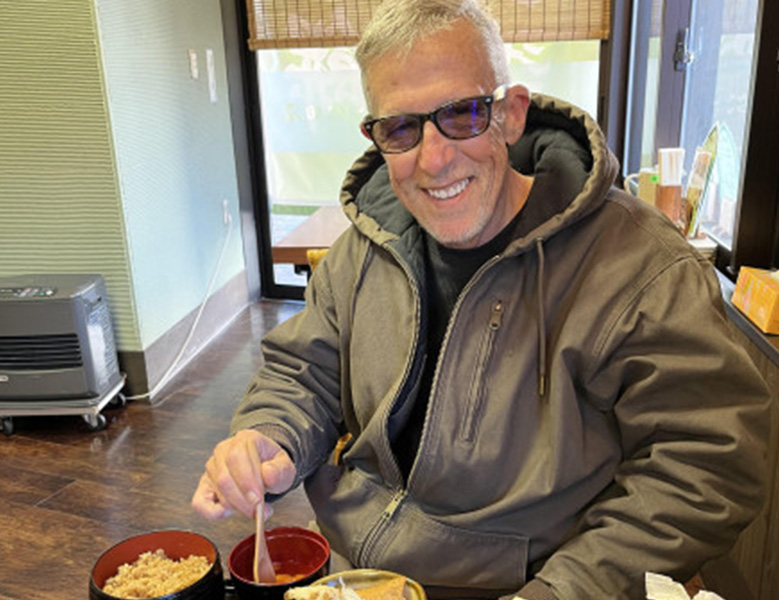
For more than three decades at the University of St. Thomas, Dr. Donald R. Frohlich III inspired students to think more deeply about biology, evolution, genetics and, even more so, about the enduring relationship between science, philosophy and faith.
Known affectionately by colleagues and former students simply as “Don,” Dr. Frohlich passed away peacefully on April 29, 2026, in Houston at the age of 70. In the days following his death, social media filled with tributes from former students recalling a professor whose classroom challenged them intellectually while also encouraging curiosity, wonder and dialogue.
“Don was a wonderful example of a life-long learner,” said Dr. Maia Larios-Sanz, professor of biology and interim dean of the Division of Natural Sciences, Engineering and Mathematics at UST. “He was a trusted mentor and a caring educator who wanted to instill in his students a love for biology and for thinking about things in a deep way. He was a sharp thinker and enjoyed engaging everyone in conversation. I will miss him.”
Born July 15, 1955, in Lewistown, Mont., Frohlich was the oldest of four children born to Shirley M. Frohlich and Donald R. Frohlich Jr. After graduating from Bishop Kelly High School in Boise, Idaho, he pursued a lifelong fascination with the natural world.
He earned a bachelor’s degree in biology from The College of Idaho in 1978, followed by a master’s degree in biology in 1983 and a doctorate in biology in 1989 from Utah State University.
His early academic career focused on the study of sociobiology and ecology of solitary bees, and insect biochemistry and genomics. He completed postdoctoral work as a visiting scientist at the Institute for Molecular Biology and Biotechnology in Heraklion, Crete; the Departments of Physiology and Biology at the University of Pavia in Italy; and the Department of Plant Sciences and the Center for Insect Science at the University of Arizona.
But colleagues say Dr. Frohlich’s intellectual interests never stayed confined to one field for long.
He joined the University of St. Thomas (UST) in 1994, where he taught introductory biology, bioinformatics and evolution. He later served as Chair of the Biology Department from 2001 to 2007.
During his career, his research interests expanded into evolution and emergence, biosemiotics, molecular population biology, phylogenetics, and the relationship between science, philosophy and spirituality.
Those broad scholarly interests took him around the world. From 2016 to 2024, Dr. Frohlich served as a visiting professor at the School of Philosophy, Papal Seminary and Jnana-Deepa Vidyapeeth Pontifical Institute for Philosophy and Religion in Pune, India. During a sabbatical in 2017, he also worked as a visiting scholar in philosophy departments at Del Rosario University in Bogotá, Colombia, and UPAEP in Puebla, Mexico.
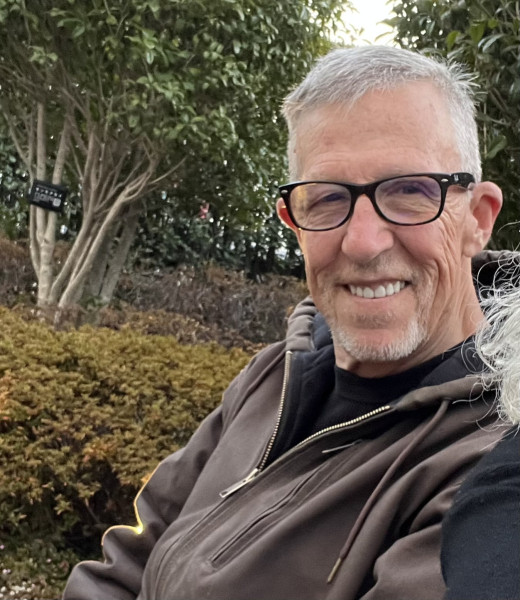 At UST, Dr. Frohlich became especially known for his work connecting science and faith, an area deeply aligned with the mission of the University and the Donald S. Nesti Center for Faith & Culture.
“I was deeply saddened to learn of the death of my good friend Dr. Don Frohlich,” said the Rev. Donald Nesti, founder of the Center. “He was one of the faculty with whom I worked most closely at UST. Don was one of the most effective bridge builders within the University community, always seeking to create ways to serve our students more fruitfully.”
Fr. Nesti recalled inviting Dr. Frohlich to create and teach a course on “Faith and Science” for the Center.
“He had a connatural understanding of the mission of the Nesti Center for Faith and Culture,” Fr. Nesti said. “When I invited him to create the syllabus and teach the course on ‘Faith and Science’ for the Center, he jumped at the chance. His students attest to his ability to engage them in dialogue about the most pressing questions and their growth through struggle with the pressing questions related to the subject. I, too, learned much from a dear friend.”
That ability to engage difficult questions became one of Dr. Frohlich’s hallmarks as an educator. Former students often described his classes as intellectually demanding but transformative, spaces where scientific inquiry and philosophical reflection could coexist.
Colleagues say his approach reflected his own deep curiosity. Outside the classroom and laboratory, Dr. Frohlich cultivated passions that reflected both patience and creativity.
“He was always reading something new,” Dr. Larios-Sanz said. “He loved to travel, and he was an avid grower of orchids and a very talented painter.”
Friends described him as someone equally comfortable discussing molecular biology, philosophy, literature or art during long conversations.
Even after retiring from UST in 2025, Dr. Frohlich’s influence continued through the generations of students and colleagues he mentored throughout his career.
For many at UST, his legacy is inseparable from the University’s Catholic liberal arts mission — the belief that education should encourage technical expertise alongside wisdom, dialogue and a deeper understanding of the human person.
Dr. Frohlich is survived by his mother, Shirley M. Frohlich; his siblings Charles Frohlich, Cheryl Stoltz and Craig Frohlich; and numerous nieces and nephews. He was preceded in death by his father and grandparents.
A funeral service will be held at 2 p.m. May 22 in the Chapel of St. Basil at the University of St. Thomas, followed by a reception. A funeral Mass in Billings, Mont., will take place later in June.
In the end, colleagues say, Dr. Frohlich’s greatest gift may have been his ability to invite others into deeper reflection about science and life itself.